
Addiction recovery is not just about stopping use. It is about getting your life back. It is about showing up for the people you love, feeling like yourself again, and building something worth holding onto. But getting there starts with finding the best addiction treatment in Ohio.
Not all treatment centers are the same. The right program will offer qualified staff, real clinical care, proper licensing, and the kind of support that stays with you long after treatment ends. Making an informed choice now can be the first step toward the future you deserve.
At Milton Jefferson Recovery, we have helped many people in Ohio find their way back to themselves, and we are ready to help you do the same.
Your Simple Guide to Finding the Best Drug Rehab
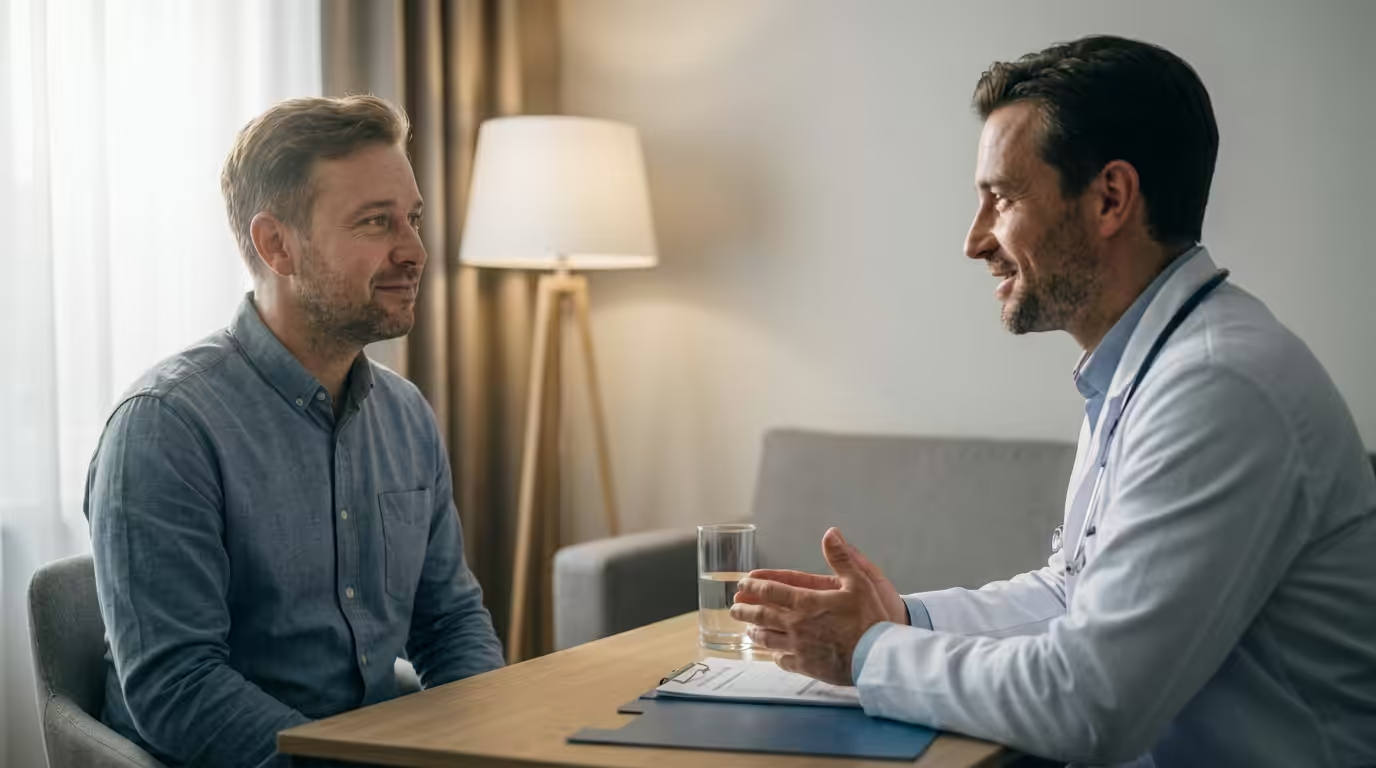
Once you decide to get help, the next step is going through the admissions process. During this time, a specialist will ask you about your history, your substance use, and your goals for recovery. But this is also your chance to ask questions.
Do not be afraid to ask a lot of them. A good drug rehab will want you to feel informed and confident about your choice, and will welcome your questions.
Here are some important things to ask any treatment center you are considering:
- Which levels of care are available?
- What is your approach to addiction treatment?
- What licenses and accreditations does the facility have?
- What credentials does the staff have?
- Do you offer evidence-based practices?
- Do you treat co-occurring disorders?
- How long is the treatment program?
- Are you in-network with my insurance?
- Do you offer medical detox or medication-assisted treatment?
- What does a typical day in treatment look like?
- Do you offer family support?
- Do you offer aftercare or alumni support?
Which levels of care are available?
Where you are in recovery today is not where you will be in three weeks, three months, or three years. Your care should reflect that. That is why a continuum of care matters so much.
A continuum of care means that treatment does not stop and start. It flows. As a person grows and heals, their level of support adjusts with them. They move from more intensive care to more independent living at a pace that makes sense given their progress. This kind of continuity keeps people from falling through the cracks during those vulnerable moments of transition.
When a treatment center offers a full range of programs under one roof, it also means your care team already knows your story. You do not have to start over with a new provider every time your needs change. That consistency builds trust, and trust is a big part of what makes recovery stick.
At Milton Jefferson Recovery, we offer a full continuum of care built around our patients, from medical detox all the way through aftercare support.
Medical Detox
Medical detox for substance use disorder is the process of clearing substances from the body under the supervision of a medical team. When a person stops using drugs or alcohol after a long period of use, the body goes through withdrawal. Sometimes that process is uncomfortable but manageable. Other times, it can be dangerous without proper medical support.
Medical detox is best for people who are just beginning their recovery journey and need a safe, supervised environment to get through withdrawal. The goal is simple: get the substances out of the body as safely and comfortably as possible so the real work of recovery can begin.
The value of medical detox is that it gives people a stable foundation to build on. Without it, withdrawal alone can send someone right back to using. With it, patients can move into the next level of care with a clearer head and a stronger start.
Inpatient Rehab
Inpatient rehab is a residential level of care where patients live at the treatment facility for the duration of their program. The day is structured around therapy sessions, group work, medical care, and healing activities. Patients step away from their everyday environment and focus entirely on recovery.
This level of care works best for people who are experiencing intense cravings, do not have a safe or stable home environment, have tried to stop before and returned to using, or need consistent around-the-clock support to feel grounded. It is designed to remove a person from the triggers and pressures of daily life so they can fully focus on getting well.
Being surrounded by a team of professionals and peers who understand the struggle creates a sense of safety and accountability that is hard to find anywhere else. For many people, inpatient rehab is the reset they need to truly begin healing.
Partial Hospitalization Program
A partial hospitalization program, or PHP, is outpatient addiction treatment that offers a high level of structured care without requiring patients to live at the facility. Patients come in for several hours of treatment each day, typically five to six days a week, and return home or to a sober living environment in the evenings.
PHP works well for people who have completed inpatient rehab and are ready to take a step toward independence, or for those who need intensive support but have a stable living situation. It maintains a high level of clinical care while beginning to reintroduce daily life.
This level of care bridges the gap between inpatient treatment and greater independence. Patients get to practice what they are learning in real time while still having significant structure and support close by.
Intensive Outpatient Program
An intensive outpatient program, or IOP, offers structured therapy and support several days a week for a few hours at a time. Patients continue living at home, going to work or school, and managing their daily responsibilities while still receiving meaningful care.
IOP is a strong fit for people who have made progress in their recovery and are ready for more flexibility, or for those with a milder substance use disorder and a strong support system at home. It helps people build the coping skills and habits they need to thrive in everyday life without leaning as heavily on structured support.
The risk of relapse does not disappear when treatment becomes less intensive. IOP keeps people connected to care during that window while also giving them the space to grow into their independence.
What is your approach to addiction treatment?
The best addiction treatment programs treat the whole person, not just the addiction. Substance use disorder does not develop in a vacuum. It is shaped by a person’s history, their mental health, their environment, and their relationships.
That is why a strong treatment approach looks at the full picture. It addresses the physical side of addiction through medical support, the emotional and psychological side through therapy and counseling, and the behavioral side through skill-building and relapse prevention. When all of these pieces work together, people have a much stronger foundation to build their recovery on.
Ask any facility you consider to walk you through their treatment philosophy and how they adjust when something is not working. The answers will tell you a lot about whether that program is the right fit. At Milton Jefferson Recovery, individualized, evidence-based care is at the center of everything we do.
What licenses and accreditations does the facility have?
Accreditation matters. It tells you that a facility has met real standards set by trusted organizations in the addiction and mental health field. It means the facility has been reviewed and found to provide safe, quality care.
When a facility is not accredited, there is no outside check on the care they provide. That is a serious concern.
Milton Jefferson Recovery holds accreditations from two of the most respected names in behavioral health, The Joint Commission and OHMAS. Our accreditations reflect our commitment to meeting the highest standards in patient care, safety, and treatment quality.
What credentials does the staff have?
The people providing your care matter just as much as the programs being offered. You want to know that the team treating you or your loved one is trained, licensed, and experienced.
Ask about the qualifications of the therapists, counselors, and medical staff at any facility you consider. Find out how much experience they have working with people in recovery. A strong team should be able to answer these questions clearly and with confidence.
At Milton Jefferson Recovery, our staff includes licensed clinicians, experienced counselors, and trained medical professionals who are deeply committed to helping people heal. They bring both expertise and genuine compassion to every interaction.
Do you offer evidence-based practices?
Evidence-based practices are treatment methods that research has shown to be effective. They are not guesswork. They are approaches that have been tested and proven to help people recover from substance use disorder.
Common examples include cognitive behavioral therapy, motivational interviewing, and medication-assisted treatment. These methods help people understand the root causes of their addiction, build healthier thinking patterns, and develop real coping skills.
At Milton Jefferson Recovery, evidence-based care is at the heart of everything we do. We stay current with the latest research so our patients always receive care that is grounded in what actually works.
Do you treat co-occurring disorders?
Your loved one may be struggling with substance use in addition to a mental health disorder. This isn’t uncommon, but for those who are living with the effects, it can be devastating and difficult to navigate.
You may be simply trying to hold your family together in the midst of the challenges that come with your loved one’s co-occurring disorders. Supportive and comprehensive care can make all the difference for you and the person you love.
Finding the best drug rehab for your loved one might involve getting help from a facility that offers dual diagnosis treatment. This type of integrated care addresses a person’s mental health needs, as well as their behavioral health challenges.
Do you offer medical detox or other medication-assisted treatment?
Addiction physically changes the brain and the body. For some people, medical support is an important part of recovery. Medication-assisted treatment (MAT) uses FDA-approved medications alongside therapy and counseling to help people manage cravings and reduce the risk of relapse.
MAT is not a shortcut. It is a proven, evidence-based approach that gives many patients a stronger foundation for lasting recovery. At Milton Jefferson Recovery, we offer both medical detox and medication-assisted treatment options to ease withdrawal symptoms and make recovery more manageable. Our medical team works with each patient to decide what approach is right for them.
How long is the treatment program?
There is no single answer to this question, and you should be cautious of any facility that gives you a one-size-fits-all response. The right length of treatment depends on the severity of the substance use disorder, the presence of co-occurring conditions, and how a person responds to care over time.
Research shows that longer treatment tends to lead to better outcomes. Rushing recovery to meet a deadline rarely serves the patient well.
At Milton Jefferson Recovery, we work with each patient to create a plan that fits their needs. Our team regularly reviews progress and adjusts the plan as necessary so that every person gets the right amount of time and support.
Are you in-network with my insurance?
Financial barriers do not have to stand in the way of getting help. Most addiction treatment is covered at least in part by insurance. There are two main types of coverage to know about.
Private insurance is coverage you get through an employer, a spouse, or a plan you purchase on your own. Public insurance is government-funded coverage for people who qualify based on income or other factors. In Ohio, the main public option is Ohio Medicaid.
Ohio Medicaid covers addiction treatment services for eligible residents, which means that cost does not have to be the reason someone goes without help. If you are unsure whether you qualify, it is worth looking into before assuming treatment is out of reach.
Milton Jefferson Recovery proudly accepts Ohio Medicaid. Our admissions team will help you verify your benefits before you begin. We will walk you through what is covered, answer your questions, and make sure you have a clear picture of your options.
What does a day in addiction treatment look like?
Beyond the programs and treatment modalities, it is worth asking a simple question. Can you picture yourself or your loved one feeling safe there?
A treatment center should feel like a place where people are treated with kindness and dignity. The staff should take time to really see each patient as a person, not just a case.
At Milton Jefferson Recovery, a typical day includes individual therapy, group sessions, structured activities, and time to rest and reflect. We build routine and structure into each day because those things support healing. But we also create space for patients to breathe, to process, and to reconnect with who they are. Every treatment plan at Milton Jefferson is built around the individual. We tailor the experience to meet each patient’s unique needs because we know that one approach does not work for everyone.
Do you offer family support?
Addiction does not only affect the person using substances. Family members often carry pain, confusion, and exhaustion long before their loved one ever enters treatment.
Family therapy and workshops give everyone involved a chance to heal together. They help families work through past conflicts, process difficult emotions, and build the kind of trust and connection that support lasting recovery.
At Milton Jefferson Recovery, family support is a core part of what we offer. We know that when families heal alongside their loved one in treatment, outcomes improve. The household becomes more stable. Relationships become stronger. And the person in recovery has a better chance of staying on track.
Do you offer aftercare or post-treatment support?
Recovery does not stop when treatment ends. Stepping back into everyday life is one of the hardest parts of the journey. Old environments, old habits, and old pressures can all come rushing back. Having continued support during this time makes a real difference.
Aftercare and alumni programs help people stay connected to their recovery long after they leave treatment. They offer accountability, encouragement, and a sense of community that reminds people they are never alone.
Alumni support is especially helpful for:
- People returning to environments that could put their recovery at risk
- Individuals who do not have a strong support system at home
- Anyone who wants ongoing connection and accountability
At Milton Jefferson Recovery, our continuing care options include regular check-ins, group meetings, and community events. We stay connected to our patients because we truly care about their long-term well-being.
How to Spot a Bad Rehab Center
Not every treatment center provides quality care. As you search for the right place, keep an eye out for signs that something may not be right.
Warning signs at an addiction treatment center include:
- They pressure you to sign up quickly or make you feel like you have no other options
- They are not licensed or accredited by a recognized organization
- They are not willing to answer your questions, or they give vague answers about their staff and services
- They promise guaranteed results or a “cure” for addiction
- They do not accept insurance or ask for large upfront payments without explanation
- They use one-size-fits-all treatment plans instead of personalized care
- They have little to no qualified medical or clinical staff on site
- They do not offer mental health support or treatment for co-occurring disorders
- They discourage family involvement in the recovery process
- They have no aftercare or alumni program once treatment ends
- Former patients consistently leave negative reviews about their experience
Finding the Best Addiction Treatment for Your Needs
You deserve an addiction treatment program and care team that takes the time to understand your story and build a plan around your needs. Milton Jefferson Recovery is one of the best drug rehabs in Ohio because we do more than provide treatment. We provide connection, compassion, and community.
Our team includes licensed clinicians, experienced counselors, and dedicated case managers who coordinate care around each patient’s individual needs. They help connect patients to the right resources, support families through every step, and make sure no one falls through the cracks.
If you are ready to take that next step, we are ready to walk it with you. Reach out to our admissions team today. Let us help you or your loved one move forward and leave addiction in the past.